
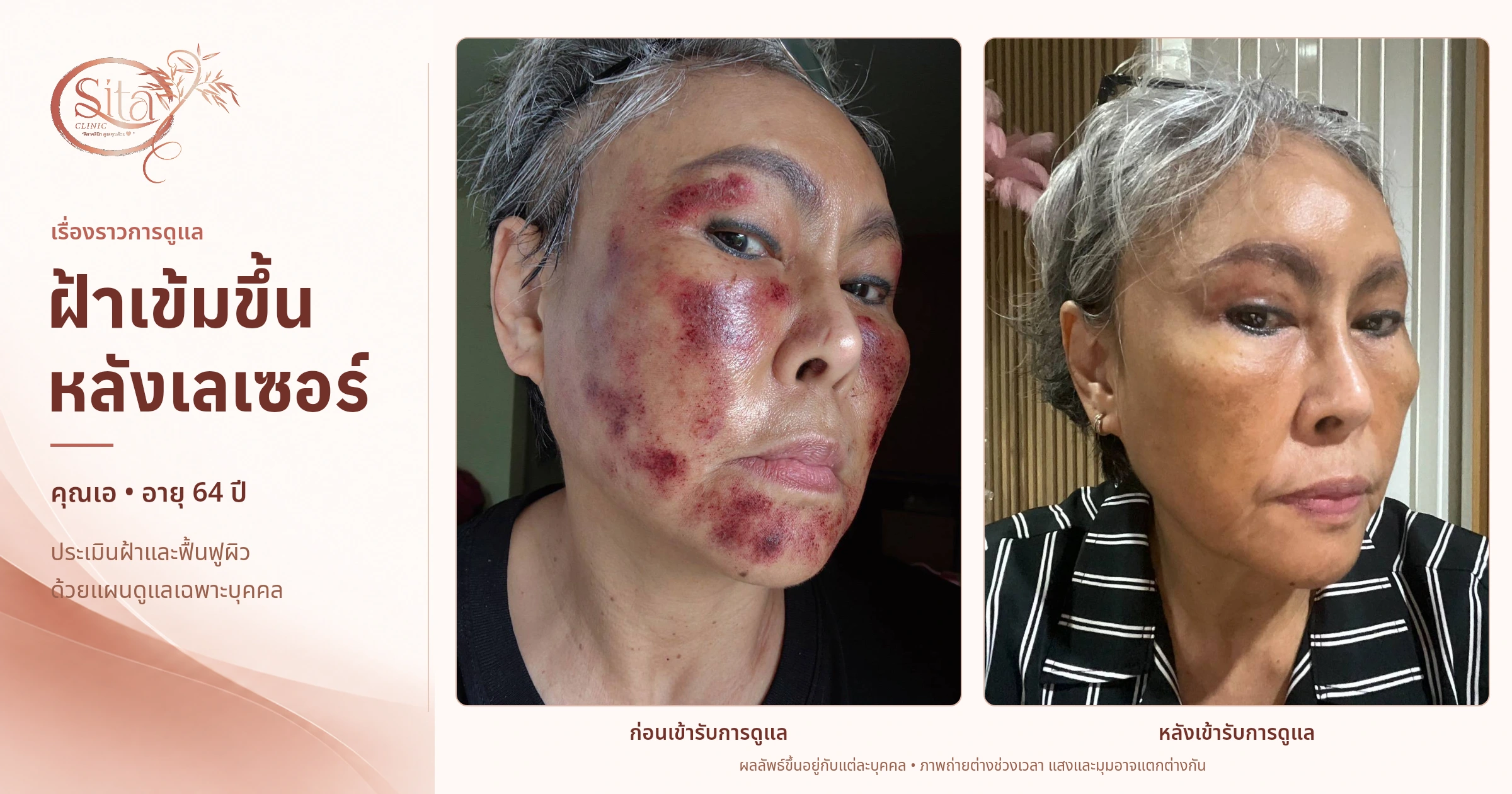
Dark spots appear after laser treatment It may not be just a recurrence of the original spot, but may be accompanied by post-inflammatory scarring, heat injury, burns, or damage to tissue at different levels.
In some cases, the appearance of a dark spot may indicate several problems at the same time. Viewing the photo or considering only the color of the spot is not enough to determine whether it is a bruise, a post-inflammatory scar, or some type of skin injury.
This article conveys the Patient Journey of “Mr. A,” a 64-year-old man who came to Sitta Clinic after undergoing several skin treatments, including more than 10 laser treatments, and felt that his skin had become more dark, red, and irregular.
The treatment plan for this case uses HCTI or Holistic Care Therapy for Individuals This is a personalized care framework at Sitaklinik, which does not start with the selection of only one instrument; it starts with identifying the problem, assessing the damage, and prioritizing what should be treated in each stage.
This story is the experience of a single individual. It cannot be used to confirm, predict, or guarantee the outcome of another person. The information about skin conditions is based on the evaluation and medical records of the case; it is not summarized from just photographs alone.
Table of Contents
Before coming to Sita Clinic: When the skin has undergone several treatments
From the history you provided before coming to consult at Sitta Clinic, you have received care for various forms of pigmentation and skin discoloration issues, including products for the skin, injections or drug delivery, and laser treatments, more than 10 times.
After laser treatment, you noticed that your skin had more red marks, dark spots, and abnormal areas. Some of the marks no longer resembled the original freckles; this caused concern about skin color, skin discomfort, and self-confidence in daily life.
In cases like this, it is not enough to simply choose a new laser, instrument, or procedure based on the technology name alone. What is more important is reviewing what has happened to the skin, and how each area’s problems may need to be treated the same or differently.

Your skin condition after laser treatment isn’t just limited to hyperpigmentation.
Based on the case’s examination, history, and assessment data, the care team considered three key problems that often occur together.
1. Heat injury or skin burns after laser treatment
The first area has a damaged skin texture due to the heat energy, but the tissue is still alive.
These tissues may also undergo repair and recovery processes, but the duration and extent of change depend on the depth of the injury, the skin condition, previous care, and individual response.
Care must therefore avoid adding irritation or hastening procedures while the skin is not yet ready, and monitor how the redness, discomfort, and skin characteristics change.
2. Areas with deep damage and some tissue has lost its vitality.
Some areas of the case have deeper damage than typical burns, and an assessment found concerns that some tissue has lost its vitality, as well as damage to the structure and blood flow in that area.
Dead tissue cannot be restored to its original state. The goal of care should not therefore imply “resurrecting tissue”; rather, it should assess the extent of damage, care for living tissue, support the healing process of the skin, reduce irritants, and monitor possible outcomes such as abnormal skin color, altered surface texture, or scarring.
Confirmation of necrosis and the degree of damage requires medical examination; it cannot be determined solely by skin color or online photos.
3. Pigmentation and pigment abnormalities associated with laser treatment
In addition to tissue damage, you also have freckles and dark spots associated with changes in pigment after laser treatment.
Laser energy can trigger inflammation or affect pigment-producing cells, causing existing dark spots to appear darker or dark spots to form after inflammation, especially in those with a history of dark spots, skin sensitivity to inflammation, or skin that is prone to dark spots after irritation.
Therefore, the post-laser dark spots may consist of:
Old spots that have become clearer
Darker spots appear after the stimulation
Dark marks after inflammation
Skin discoloration during healing of the skin
Damage to the pigment-producing cells
Many types of problems occur together
Treating all the marks as just one spot may not correspond to the actual skin condition.
Why shouldn't you rush to repeat the laser treatment?
Laser and non-power-based treatments do not have the same effect on everyone. The response depends on the type of machine, the power level, the duration of the pulses, repeated or overlapping shots in the same area, the cooling system, the type of pigmentation problem, and the individual's skin characteristics.
When the skin is affected by both heat injury, tissue damage, and pigment abnormalities, rushing to repeat laser treatment without resolving the underlying problem may increase inflammation or cause more discoloration of the skin.
In your case, the care team did not start with choosing a new laser; instead, they started with the question:
Which part is tissue that has a chance of recovery
Some parts are deeply damaged and need to be monitored.
Which marks are likely related to freckles or moles?
Is the skin still inflamed or irritated?
Which method should be done before, after, or should be avoided during that time?
What care can be provided in a practical and safe manner for this service recipient?

What is HCTI?
HCTI stands for Holistic Care Therapy for Individuals It is a personalized care framework used by Sita Clinic to assess, prioritize, and monitor care.
HCTI is not a single drug, laser device, product, or procedure, and it is not a one-size-fits-all formula.
The main principles include:
Holistic — looking at the overall problem
Consider the patient's skin history, past surgeries, health, triggers, daily care, and the patient's concerns together.Care — Organizing the care process
It is said that which part should be treated first, which part should be waited for, and which method may not be suitable for the skin at that time.Therapy — Choosing and combining approaches rationally
The plan may include more than one method as necessary, without being bound to any particular tool or procedure.Individual — Adjusted for each individual
The method that works for one service recipient may not be suitable for another. Even if the visible marks look similar.
The process of HCTI is therefore:
Listen → Assess → Identify the problem → Prioritize → Plan → Follow up → Adjust the plan
The difference does not lie in having more surgeries, but in making the right choice.
The care approach for melasma in different medical facilities may vary. Some may use lasers as the primary tool, while others may focus on treatments, products, or drug delivery. This depends on the service model and assessment of each facility.
Sita Clinic’s approach does not require all clients to start from one method; rather, it considers what the skin needs at that time and what methods should not be used first.
The difference is not in saying that one method is better than all others, but in not relying on a single tool as the answer to every problem, especially in cases where there is both skin burns, tissue damage, and the appearance of scars or dark spots together.
The development of knowledge and formulas used in care
The HCTI approach builds on the knowledge and experience accumulated over 30 years by the team of doctors, scientists, researchers, and experts.
This period of time refers to the experience and knowledge development of the team; it does not mean that Sitaklinik has been operating for 30 years and should not be interpreted as a guarantee of the treatment results.
Sita Clinic has formulas and care sequences developed by the team to be used in individual plans. The active ingredients are selected from manufacturers or suppliers in Europe based on the information and documentation of the products used.
However, the source of the active ingredient is not what confirms that the results will be better or suitable for everyone. The key remains:
Appropriateness for the problem and skin condition
The quality and condition of the used product
Evaluation by a doctor
Method and sequence of use
Monitoring adverse reactions
Adjusting the plan based on real responses
The detailed recipe, concentration, quantity, and method of use are specific to the care plan and medical records; they should not be used for self-medication or for use on other individuals.

HCTI planning for your case
For you, A, the goal doesn't start with trying to make the freckles fade the most quickly; it starts with understanding and identifying the specific problems of each area of the skin.
The care plan is considered jointly by:
The burned area of the tissue is still alive.
Areas with deep damage
Dark spots and black marks after inflammation
Sensitivity and skin comfort
History of laser treatments and previous procedures
Health and individual factors
Skin care in daily life
The responses observed in each follow-up period
The goals in each period may therefore differ. Some periods prioritize reducing triggers and caring for living skin, while others track the healing of the skin and others consider the remaining pigmentation issues.
Changes during tracking
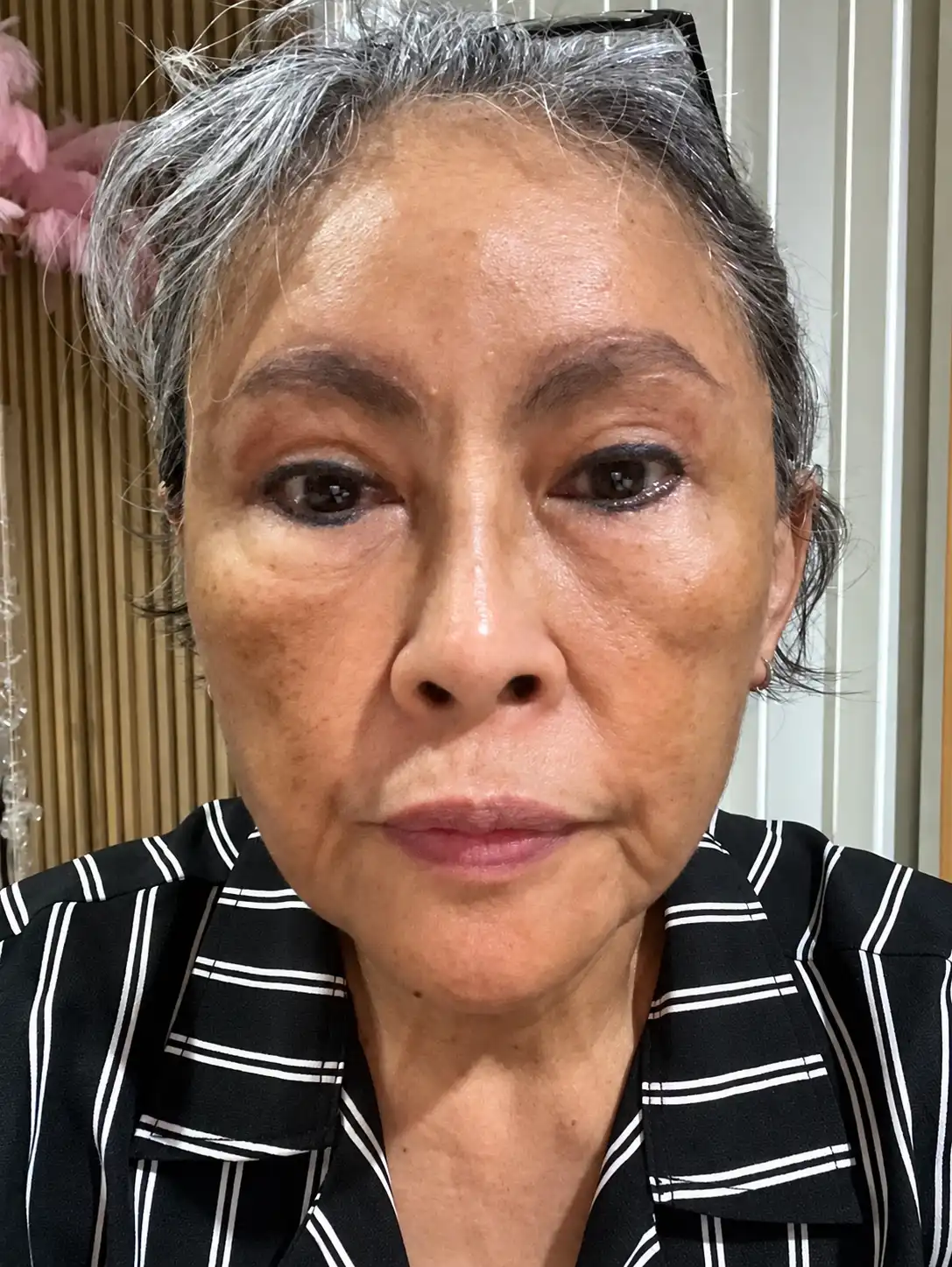
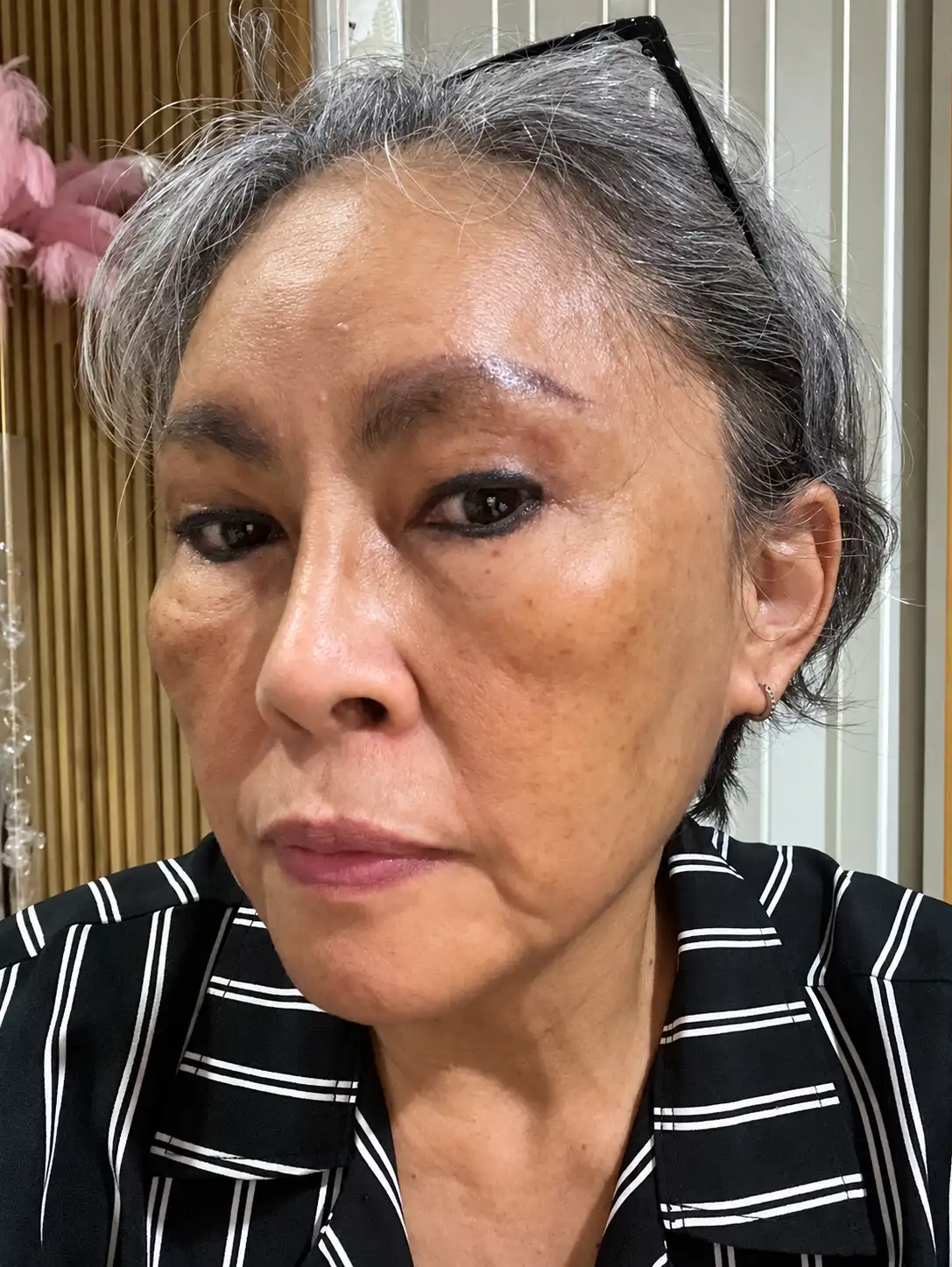
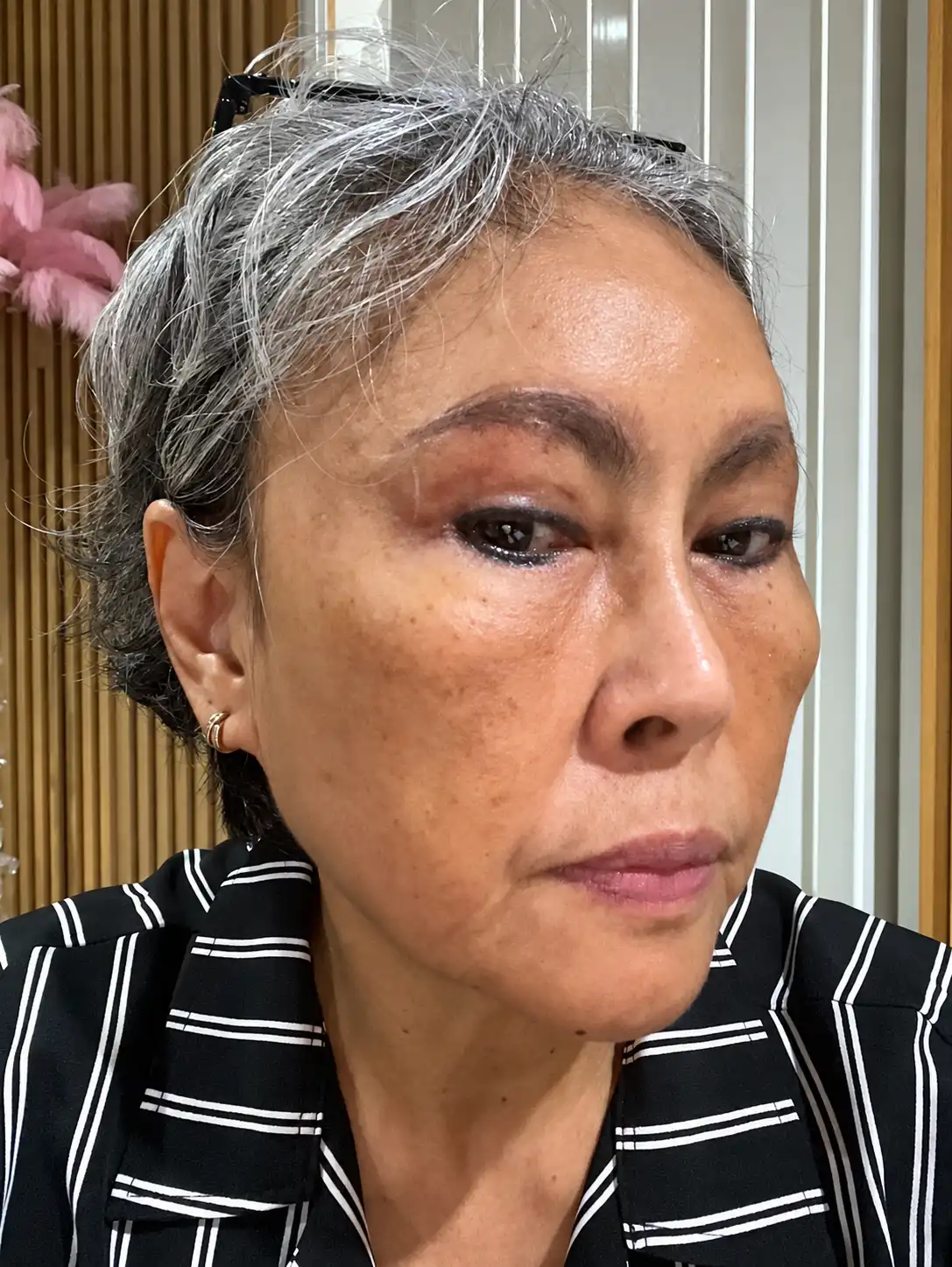
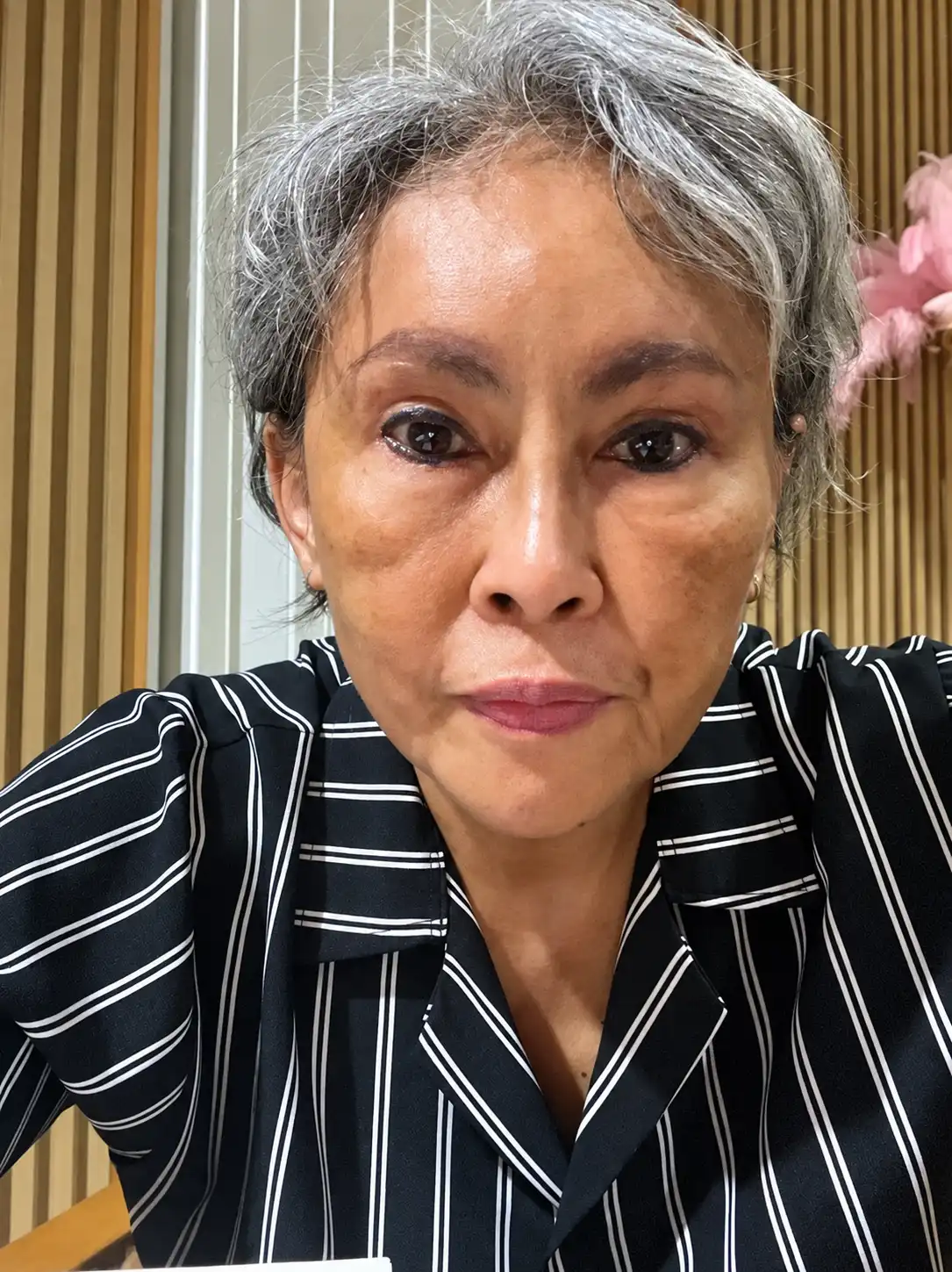
From the images and case follow-up data, your redness and dark spots have changed from the initial stage. The overall skin looks calmer and more uniform in the later image.
Ms. A reported that she felt more confident with her skin and was able to return to her daily life with more ease.
However, the before-and-after images cannot tell the depth of the damage, cannot indicate the percentage of recovery, and cannot be used to guarantee that others will experience the same results.
Light, camera angle, distance, camera used, display color, and the time of photography may all affect the skin’s appearance. Therefore, the image should be considered in conjunction with the patient’s medical history, examination, and follow-up information.
Consistency is part of the Patient Journey
Ms. A is committed, patient, and consistently takes care of herself according to the case information. This collaboration is part of the care process.
However, even with continuous care, the results still depend on the depth of the damage, the skin condition, the health issues that may be present, the treatment approach, and the individual's response.
If the skin does not respond as expected, it is recommended to reevaluate and review the plan together with the doctor, rather than adding more products, repeating laser treatments, or choosing a new procedure on your own.
After laser treatment, should I still protect myself from the sun?
Sun protection remains an essential foundation of care for freckles and pigmentation issues, especially when the skin has just been inflamed or injured.
General guidelines may include:
Avoid direct sunlight when possible.
Use hats, umbrellas, or other physical protective equipment.
Use sunscreen products that are suitable for your skin type.
Avoid products that cause irritation or discomfort.
Do not scratch, peel, or rub the area that is recovering.
Follow the specific instructions after the procedure.
If there are still wounds, soreness, swelling, blisters, abnormal scabs, or any severe symptoms, you should consult a doctor before choosing additional products or procedures.
Frequently asked questions about darker spots after laser treatment
What causes darker spots after laser treatment?
It may be related to pre-existing pigment spots that have been triggered, post-inflammatory hyperpigmentation, heat injury, damage to pigment-producing cells, or several problems occurring together. This must be considered in conjunction with the history and examination.
Can the skin recover after laser treatment?
Depending on the depth of the injury, if the tissue is still alive, there may still be processes of repair and recovery. However, if some of the tissue has died, it cannot be restored to life. Care will focus on assessing the damage, supporting the recovery of the surrounding area, and managing the resulting consequences.
How can you tell if the skin is burned or has dead tissue?
It should not be diagnosed based on the photos or color of the marks alone. Such a condition requires examination by a physician, as well as consideration of the skin's sensation, circulation, lesion characteristics, and changes over time.
I have had laser treatments for freckles several times. Should I continue?
The number of procedures alone cannot be used to make a decision; it is necessary to review which type of laser was used, how the skin reacted, and whether there were any injuries or abnormalities in the pigmentation. Before considering whether to continue the treatment, take a break, or change the order of care.
What is HCTI treatment?
HCTI is not a single type of procedure; it is a framework for evaluating and selecting individual approaches. The method used therefore depends on the problem, the skin's condition, and the individual patient's health and response.
Does HCTI guarantee that freckles or sunburns will disappear?
Results cannot be guaranteed due to differences in the depth of damage, skin condition, health, and response. The goal is to select and adjust the treatment plan based on each individual's specific information, and to continuously monitor the progress.
If the dark spots or skin abnormalities worsen after laser treatment, what should I do first?
If you have ever had laser treatment and found that the pigmentation has become darker, the skin is redder, more irritated, or has abnormal skin color, or if you suspect that the skin has been damaged, you should not rush to choose a new laser treatment or procedure yourself.
A good starting point is to collect information about the instrument or procedure you have received, the date of the procedure, the aftercare symptoms, the products and medications used, and photographs in chronological order to use as a basis for evaluation by the doctor.
General information sources
The publication of the image: The image of the service recipient in this story has been granted permission to be published within the limits permitted by the service recipient. Please do not copy, modify, or republish the image without permission.
Results and treatment methods depend on the skin condition, health, level of damage, associated problems, and individual response. This information is for basic understanding only; it is not intended to replace examination, diagnosis, or medical treatment.
Problems
If these problems are what you've experienced

- Laser burns
- Using skin whitening creams containing chemicals, steroids, hydroquinone, and mercury
- Melasma injections that burned your face
- Hormonal melasma from birth control pills, injections, and all kinds of female hormone medications
- Working in front of a computer screen or heat source
- Working outdoors or being exposed to the sun without proper protection


