Firmness
“My skin does not feel as firm as before.”
SITA Medical Clinic · Lat Lum Kaeo, Pathum Thani
Daily 08:00–19:30
Daily 08:00–19:30 · 082 474 2969
01 — SKIN & FACIAL AGING · Skin and facial changes with age
Firmness, facial contours, lines and skin texture may change together or at different times.
Care should begin by understanding what you notice, what matters to you and what suits your skin now.
Skin care, particularly melasma and skin recovery, remains SITA’s main focus. General information, not a diagnosis.
This page provides general information for understanding, not a diagnosis or individual treatment advice.
People often use one phrase, such as “my face is starting to sag” or “I look older”, to describe several things they notice at the same time.
Looking at each concern separately reveals different questions. These changes do not necessarily happen together.
These five areas describe everyday observations. They are not medical classifications or criteria for self-assessment.
People often notice changes in everyday moments, such as looking in a mirror, seeing a photograph or touching their skin. The examples below are not criteria for self-assessment.
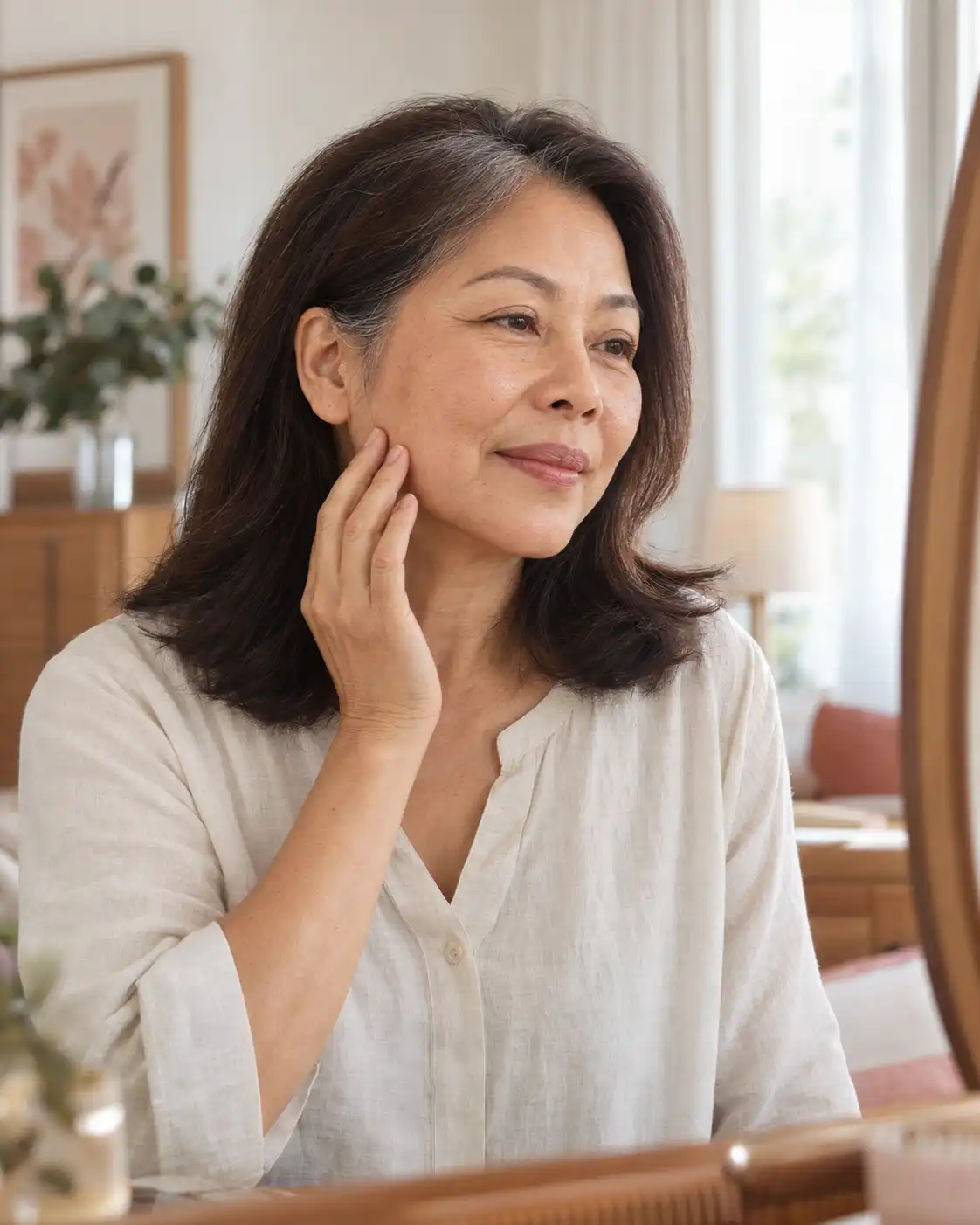
“My skin does not feel as firm as before.”
“My jawline or the area under my chin looks different.”
“I am starting to notice lines, or my skin feels different.”
“My concern is about one area, rather than my whole face.”
These observations do not point directly to any particular treatment. The same concern may call for different approaches in different people, and some concerns may not need action yet.
Two people of a similar age may notice different changes, prioritise different areas and have different skin conditions, circumstances and concerns they want to address first.
Which area is involved, and have you noticed it for some time or only recently?
What you want to address first may not be what other people notice most.
Your current skin condition, previous care and everyday life at present.
There are no right or wrong answers to these three questions. You do not need to answer all of them before a consultation.
What you see helps start the conversation, but does not automatically tell us:

Your observations and what you would like to share
A doctor assesses the area, your skin condition and your goals
Consider which approach is appropriate, or whether no action is needed yet
For some concerns relating to:
Technology-based options may be considered after assessment. Some people may not need a device-based treatment, or may benefit from starting with another area of care.
One person may be concerned about facial contours and firmness, while another notices changes in texture, dryness or sensitivity. These can occur together, but they raise different questions.
FORM / STRUCTURE CONCERN
SKIN QUALITY / SURFACE CONCERN
Care focused on facial contours does not address every aspect of skin quality, and vice versa.
If your main concern is sensitive, easily irritated skin or skin that needs recovery, Sensitive or easily irritated skin → Read about Skin Recovery →
Some people notice changes only around the eyes, rather than across the whole face. It helps to discuss this area specifically, rather than grouping it under “looking older”.
What you may notice around the eyes
Care for the eye area depends on a doctor’s assessment. This page does not recommend a specific approach.

Skin and facial changes matter to many people. At SITA, Healthy Aging also considers other factors that affect everyday life.
This page asks:
As skin and facial features change with age, what are we noticing?
HEALTHY AGING asks:
As life changes over time, which abilities do we want to maintain?
Start by telling us what looks or feels different about your skin and face, what matters to you and what care you have had before.
We can then assess which concerns to address and which approach suits your circumstances.